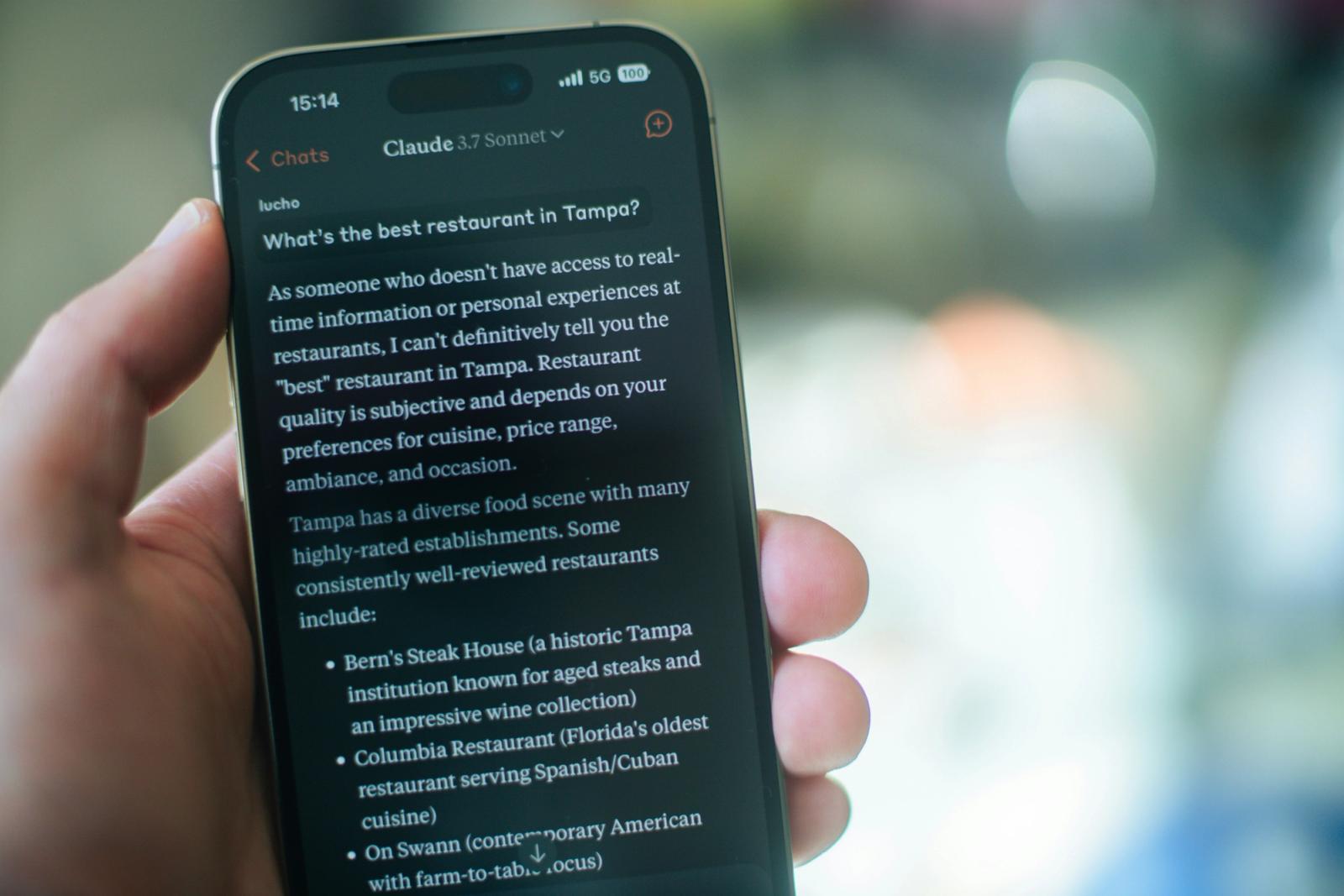
A homeowner's pipe bursts on a Sunday night. They don't open Google and scroll through ten blue links. They type into ChatGPT: "Who's the best emergency plumber near me?"
ChatGPT thinks for a second and recommends two or three businesses by name.
If your business isn't one of them, that lead is already gone — and you never even knew it existed.
This is the new reality of local search in 2026. And the hard truth is that only 1.2% of local businesses are ever recommended by AI search engines. The other 98.8% are invisible — not because they're bad businesses, but because they haven't optimized for how AI engines find and evaluate local companies.
Here's exactly what it takes to be in that 1.2%.
Before getting into tactics, it's worth understanding why this isn't just regular SEO with a different name.
Traditional SEO is about getting your web pages to rank for keywords. AI search optimization is different — it's about making your business trustworthy and understandable enough that AI tools confidently recommend you. When someone asks ChatGPT or Perplexity for a local business recommendation, the AI doesn't crawl your website in real time.
Instead, AI engines synthesize answers from multiple sources they've already indexed — your website, your Google Business Profile, your reviews, third-party directories, and what other websites say about you. The engine then picks the businesses it can cite with the most confidence.
A startling trend in 2026 is that ChatGPT often trusts what others say about you more than what you say on your own site. Over 65% of citations in AI responses come from third-party sources like Reddit, Quora, industry publications, and review aggregators.
That's a fundamental shift. Your website matters — but your reputation across the web matters more.
A complete, accurate Google Business Profile is still the backbone of local AI visibility, but it now needs to work for AI retrieval systems, not just the Google Maps pack.
This means going beyond just listing your hours and phone number. Fill in every available field:
AI prioritizes fresh data — keep your information current and respond to reviews with detailed, helpful responses. An abandoned or incomplete GBP is a strong signal to AI engines that a business may not be active or trustworthy.
Schema markup is structured data you add to your website that tells search engines and AI engines exactly what your business does, where it does it, and who it does it for.
While Google uses schema for rich snippets, ChatGPT uses it to understand the "entity" of your business. Use Organization, LocalBusiness, and FAQ schema to provide a structured map that the AI can parse with high confidence.
For a plumbing company in Kennewick, WA, a properly implemented LocalBusiness schema tells AI engines:
That level of specificity is what allows an AI engine to confidently recommend you by name rather than giving a generic answer.
To be recommended accurately, a business needs crawlable pages, clear service and location data, consistent NAP, schema markup, strong reviews, third-party validation, and ongoing monitoring of how AI describes the business across real prompts.
Reviews are doing double duty in the AI search era. They're a direct signal to AI engines that real customers have verified your service quality, and they're content that AI engines can extract and synthesize when forming a recommendation.
What matters most:
If ChatGPT is asked "What is the best HVAC service in Milford?", it will look at Yelp, Angi, and local news citations. If you aren't in the consensus, you don't exist in the answer.
NAP stands for Name, Address, Phone — and consistency across every place your business appears online is one of the most foundational signals for local AI visibility.
If your business is listed as "Smith's Plumbing" on Google, "Smith Plumbing LLC" on Yelp, and "Smith Plumbing and Drain" on Facebook, that inconsistency creates uncertainty for AI engines. Uncertain data doesn't get cited.
Audit every directory listing you have — Google, Yelp, Facebook, Angi, HomeAdvisor, Nextdoor, BBB, and your local Chamber of Commerce — and make sure the business name, address, and phone number are identical across all of them.
Generic websites with a single "Services" page don't give AI engines enough to work with. What converts in AI search is specificity — a dedicated page for each service you offer, written for the specific areas you serve.
Instead of one Services page, think:
An example of AI-optimized FAQ content for a local business: "Q: Do you provide same-day HVAC repair in [City]? A: Yes, we offer same-day HVAC repair throughout [City] and surrounding areas. Our emergency technicians are available 24/7 and typically arrive within 2 hours of your call."
This kind of specific, question-and-answer formatted content is exactly what AI engines extract when forming a recommendation response.
This is the hardest signal to build quickly — and the one that matters most. This shift from clicks to citations is the core of generative engine optimization, and it rewards a fundamentally different kind of marketing — one where being quoted on a respected third-party site counts for more than ranking #4 in Google.
For a local service business, third-party mentions come from:
You don't need national press. Local authority signals from credible local sources carry significant weight for local AI queries.
You might be wondering whether AI search is actually driving enough traffic to justify this effort. The numbers in 2026 suggest it very much is — and the conversion rates are remarkable.
Google organic converts around 1.76%, while Perplexity sits near 10.5%, ChatGPT near 16%, and Claude as high as 16.8%. Visitors arrive already informed and trusting the recommendation, so they convert faster.
That's not a small difference. A visitor who arrives at your site because an AI engine specifically recommended you is nearly ten times more likely to become a customer than someone who clicks a Google search result. They've already been pre-sold by the recommendation.
ChatGPT commanded roughly 17% of all global digital queries by mid-2026 and serves over 900 million weekly active users. A meaningful portion of those queries are local and commercial — exactly the kind of searches that bring customers to local service businesses.
The opportunity here is real — and it's still early. Most of your competitors haven't thought about AI search optimization at all. They're still focused entirely on their Google ranking while the search landscape shifts under their feet.
The businesses that move first on this will build a citation advantage that compounds over time. AI engines develop patterns — they cite the businesses that show up consistently across structured data, reviews, and third-party sources. Once you're in those patterns, you're hard to displace.
The six signals above aren't quick fixes. They're infrastructure. Building them takes time, consistency, and the right technical setup on your website. But every month you wait is a month your competitors could be building that advantage instead.
At Poole Media, we build every client website with AI search optimization built in from day one — not as an afterthought. That means schema markup implemented correctly, service-area pages structured for AI extraction, FAQ content formatted for how AI engines synthesize answers, and an agentic SEO system that monitors and improves your AI visibility every single month.
If you want to see where your current site stands, run a free instant audit below. It takes 30 seconds and tells you exactly what's holding your site back — on Google and in AI search.
Jayce Poole
Owner Operator
My name is Jayce and I am the creator and founder of Poole Media. I specialize in SEO, web development, and software engineering. I have a desire to learn the cutting edge technology that allows online brands to flourish and rise to the top.
